

April 5, 2026, Easter Sunday
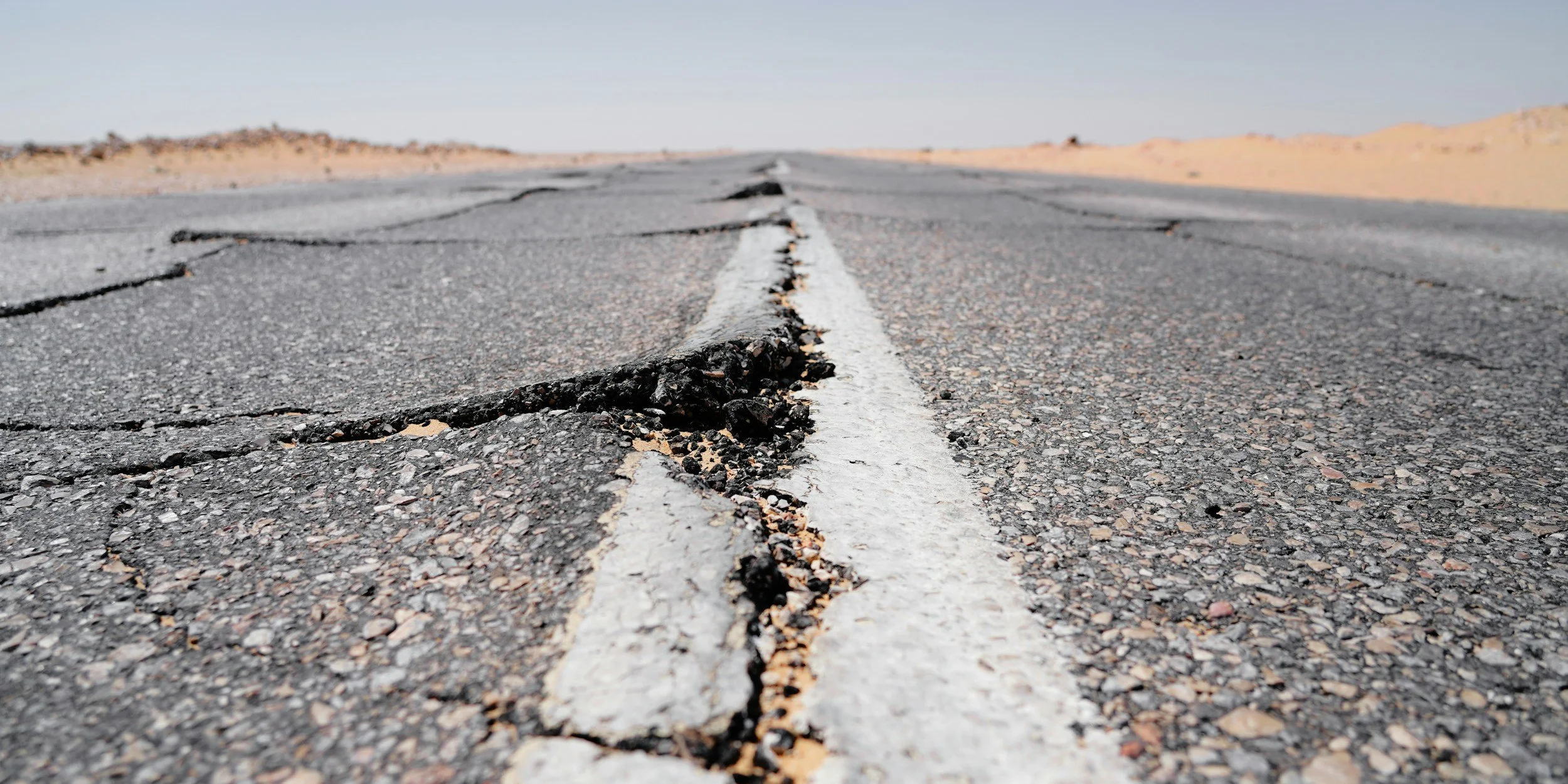
There is something unsettling about an earthquake.
Nothing is ever certain during an earthquake. Nothing is stable. Everything totters. The ground beneath your feet—what you trusted, what you assumed would hold you—suddenly shifts, cracks, and trembles. In my three years of seminary in California, I experienced quite a few earthquakes, but I will never forget my first one. It came on unexpectedly, and ended before I could register what I was experiencing. It was unsettling.
And that is how Gospel of Matthew tells the story of Easter.
“Suddenly there was a great earthquake…”
Not a gentle dawn. Not a quiet realization. Not a gradual dawning of hope.
But an upheaval.
A disruption.
A holy shaking.
And perhaps that is exactly what Easter must be.
Because everything that came before it—everything we have walked through this past Holy Week—has brought us to the edge of certainty. We have stood at the foot of the cross. We have watched as love was crucified, as hope was sealed behind a stone, as death seemed to have the final word.
And now the earth itself convulses.
Because God is doing something that will not leave the world unchanged.
Each of the Gospels tells this story differently. In Gospel of Luke and Gospel of John, we find confusion, wonder, disbelief, and gradual recognition. But Matthew—Matthew gives us something else.
Matthew gives us triumph.
God unleashes power.
The natural world itself reacts. The boundary between heaven and earth is shattered. An angel descends—blazing, dazzling, impossible to ignore. This is not subtle. This is not quiet. This is not safe.
And the angel does something almost playful, almost defiant.
He rolls away the stone—not to let Jesus out, because Jesus is already gone—but to let the witnesses in. And then, in a gesture that borders on holy mockery, he sits on it.
The stone that sealed death.
The stone placed there by imperial authority.
The stone meant to say, “This is final. This is over.”
Now becomes a chair.
A footstool.
A joke.
The empire that placed it there is exposed as powerless. The seal that represented Rome’s authority snaps apart like flimsy tape around an old crime scene. The guards—symbols of military might—collapse in fear, as though they themselves are dead.
And Matthew wants us to see this clearly:
No one and nothing will obstruct what God is doing.
But here is the strange thing.
In the midst of all this cosmic upheaval—earthquakes, angels, broken seals—two women arrive quietly at the tomb.
Mary Magdalene and the other Mary come simply “to see.”
Matthew does not tell us why.
He does not explain their motivations.
But perhaps he doesn’t need to.
Anyone who has known grief understands.
Sometimes you just need to go back to the place where it happened. Sometimes the emptiness draws you. Sometimes love refuses to let you stay away.
They are not expecting resurrection.
They are not anticipating victory.
They are carrying the quiet, heavy weight of loss.
And then everything changes.
The angel speaks:
“He is not here; for he has been raised.”
And the women are caught between two worlds.
Fear—and joy.
Not one replacing the other, but both at once.
Because resurrection is not simply comforting. It is disorienting. It shakes the foundations of everything we thought we knew—about death, about power, about what is possible.
Matthew’s story is brief—almost surprisingly so. There are no long conversations, no gradual unfolding. It happens quickly, urgently, as if there is no time to linger.
Because there isn’t.
The guards will wake up.
The empire will respond.
And Rome never runs out of crosses.
Even in the moment of resurrection, the world is still dangerous.
And yet—God acts anyway.
Then suddenly, on the road, it happens.
They meet him.
Jesus.
Alive.
Not as an idea. Not as a memory. Not as a spiritual presence.
But there. Before them.
And they do the only thing they can do.
They fall at his feet.
They grasp him.
They worship.
Or perhaps we should say, they reverence him. Matthew doesn’t seem concerned with the distinction. What matters is the response: awe, surrender, recognition.
This is victory—but not the kind the world expects.
Not domination.
Not revenge.
Not power seized and wielded against others.
The triumph of Easter belongs to God alone.
And the response it calls forth is not arrogance—but worship.
Not control—but obedience.
“Go,” Jesus says. “Tell my brothers to go to Galilee.”
Even now, the mission continues.
And here is something else Matthew wants us to notice.
Where are the disciples?
The eleven men who followed Jesus so closely?
They are absent.
Not at the tomb.
Not in the first moments of resurrection.
It is the women—the ones whose testimony would not even have been considered valid in a court of law—who become the first witnesses.
The first proclaimers.
The first apostles of the resurrection.
And the message they carry is not just for the eleven, but for all of them—for the whole community of followers, men and women alike.
“Go to Galilee,” Jesus says.
Back to where it all began.
Back to the margins.
Back to the place where diverse people gathered and the kingdom first took root.
Resurrection does not end the story.
It sends it outward.
Now let’s be honest.
Easter is strange.
Matthew himself gives us permission to say so. After all, in the next chapter, he tells us that even the dead begin to appear in Jerusalem.
The world is turned upside down.
The boundaries between life and death blur.
Nothing is stable anymore.
Because resurrection is not just a happy ending.
It is a revolution.
And it is a revolution aimed at one enemy above all others:
Death itself.
As Paul the Apostle would later write, echoing the prophet Isaiah: “Death has been swallowed up in victory.”
Who among us does not know the ferocity of death?
Who has not felt its cruelty?
Who has not stood at a graveside and wondered how the world can go on?
Death robs. Death blindsides. Death silences.
Human history is filled with those who have used death—threatened it, inflicted it, wielded it—as a tool of power.
Empires depend on it.
Tyrants rely on it.
Because nothing silences like death.
But Easter declares something astonishing.
Death does not get the last word.
Not over Jesus.
Not over those who belong to him.
Not over the world God loves.
And this is not a small or sentimental claim.
It is a direct challenge to every power that uses death to control, to oppress, to silence.
Matthew makes this clear by drawing our attention to the guards—to the machinery of empire standing watch over a tomb.
Rome did everything it could to make Jesus a nobody.
To erase him.
To seal his fate.
But God raised him.
And in doing so, God exposed the limits of every empire, every tyrant, every system that relies on death.
So what happens now?
What happens when a crucified man is raised?
What happens when death loses its grip?
What happens when those who were silenced are given voice again?
The answer is this:
The story cannot stop.
The message must be told.
The women run.
The disciples are summoned.
Galilee awaits.
And the world begins to change.
But let us be careful.
Easter is not permission for the church to claim power for itself.
It is not a license for arrogance or domination.
The victory belongs to God.
Always.
The witnesses respond not with pride, but with worship and obedience.
And so must we.
And yet, there is deep comfort here.
Because if death has been defeated—if it has truly been swallowed up—then everything changes.
Our grief is real, but it is not final.
Our losses are painful, but they are not permanent.
Those who have been silenced are not forgotten.
Christian faith, rooted in resurrection, refuses to let the dead remain voiceless.
It insists that their lives matter.
That their stories endure.
That they are held in the life of God.
So this morning, as the earth still trembles beneath our feet, we are invited into that same strange mixture of fear and joy.
Fear—because God is doing something beyond our control.
Joy—because what God is doing is life.
We are invited to fall at the feet of the risen Christ.
To worship.
To listen.
And then to go.
To carry the message into a world that still knows death all too well.
To bear witness that death is not ultimate.
That love is stronger.
That life will have the final word.
Because the stone has been rolled away.
The tomb is empty.
The earth has shaken.
And Christ is risen.
He is risen indeed.
Alleluia.