

February 8, 2026, The Fifth Sunday after Epiphany
“Salt and Light: Living the Life We Have Been Given”
The Epiphany season is, at its heart, about revelation—about things being made visible. We began with light breaking into darkness, with magi guided by a star, with voices from heaven and water poured out at the Jordan. And over these past weeks, we have been listening as Jesus calls disciples—“Come and see,” “Follow me”—and begins to describe what a life shaped by that call actually looks like.
Last week, in the Beatitudes, Jesus named a way of being in the world that feels upside down: blessing in poverty of spirit, in mourning, in meekness, in mercy, in peacemaking. Today, in the Sermon on the Mount, Jesus moves from who we are becoming to how that life shows up in the world. He reaches for two ordinary, everyday images—salt and light—and says, This is what you are.
Not this is what you should try to be someday.
Not this is what you earn if you get it right.
But you are the salt of the earth… you are the light of the world.
Salt and light are not abstract religious ideas. They belong to kitchens and streets, to lamps and meals, to work and survival. And that is already a clue to what Jesus is saying: the life shaped by the Beatitudes is not meant to remain private, interior, or invisible. It is meant to touch, to affect, to change the world around it.
Let’s start with salt.

Salt performs many functions. It flavors food. It preserves what would otherwise decay. It purifies. It transforms what it touches. And crucially, salt does not exist for itself. No one eats a spoonful of salt and calls it a meal. Salt only makes sense in relation to something else. It gives itself away so that others may live.
In the ancient world, salt was precious. It kept food from spoiling. It sustained life. And Jesus says, “You are the salt of the earth. But if salt has lost its taste, how can its saltiness be restored?” In other words, if the community shaped by God’s reign stops being distinctive, stops being willing to give itself away, it becomes useless—not because it is immoral, but because it is inert.
That’s where Isaiah 58 comes crashing in on us.
The prophet is speaking to a people who are very religious. They fast. They pray. They seek God daily. And God says, through Isaiah, “I see all of that—and I’m not impressed.” Why? Because their religious devotion has become disconnected from justice, from mercy, from the concrete needs of their neighbors.
“Is not this the fast that I choose,” God asks, “to loose the bonds of injustice… to share your bread with the hungry… to bring the homeless poor into your house?”
In other words: if your faith does not change how you treat the vulnerable, then it has lost its saltiness. It may look pious. It may feel sincere. But it no longer preserves life. It no longer heals. It no longer reflects the heart of God.
And notice what happens when the people live this way: “Then your light shall break forth like the dawn.” Justice and light are inseparable. When God’s people act with mercy and courage, illumination follows.
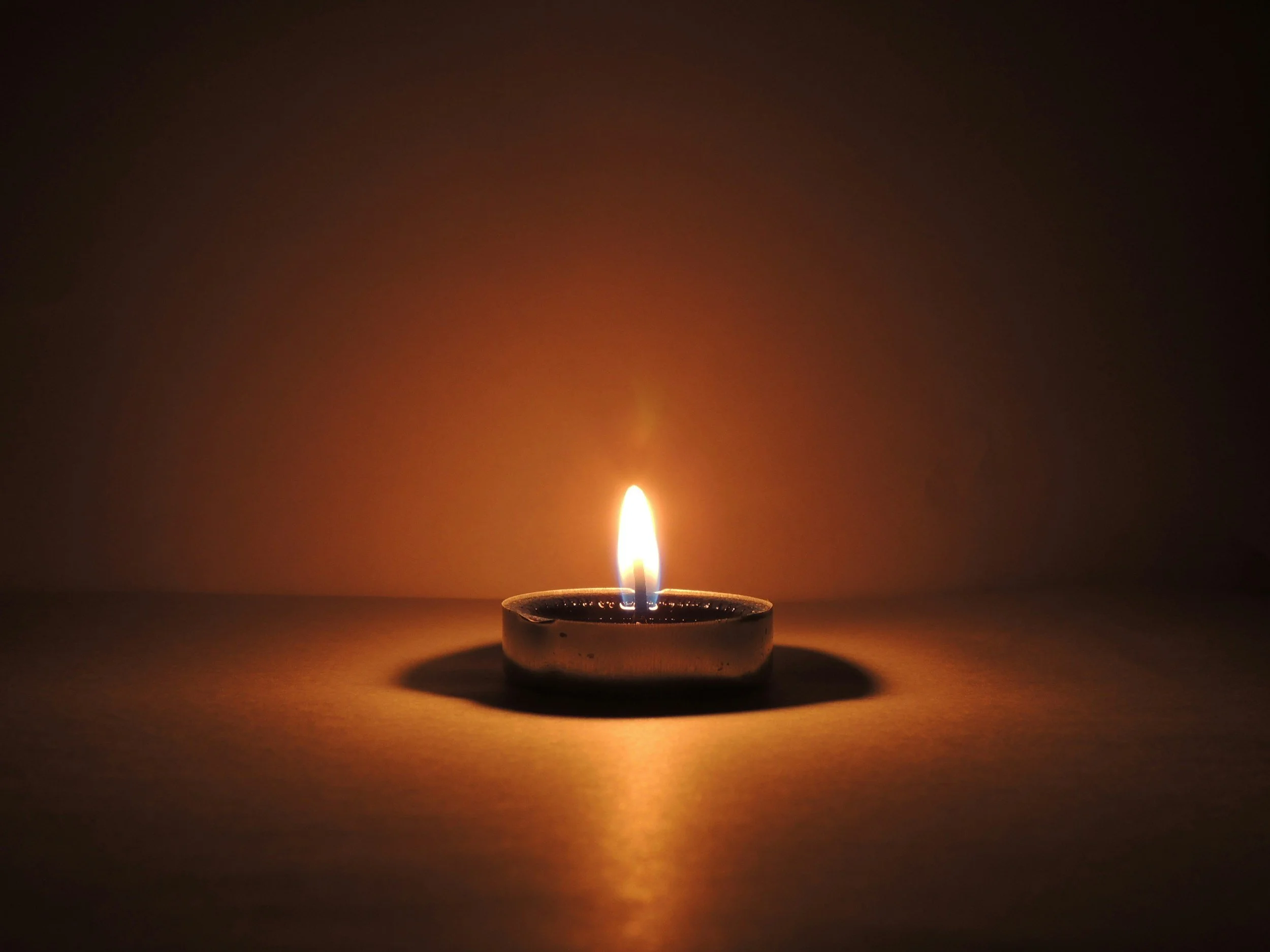
That brings us to the second image: light.
Light is one of the dominant themes of Epiphany. And for Israel, light was never just a metaphor for personal enlightenment or spiritual warmth. To be called “a light to the nations,” as Isaiah says elsewhere, was a deeply political and theological vocation. Israel was to live in such a way that the world could see an alternative to imperial violence, exploitation, and fear.
Jesus picks up that tradition and applies it to his followers: “You are the light of the world. A city built on a hill cannot be hidden.”
This is not about showing off. Jesus is very clear elsewhere about not practicing piety to be seen. Rather, it is about visibility that cannot be avoided when a community lives differently. When people forgive instead of retaliating. When they share instead of hoard. When they tell the truth in a culture of spin. When they choose mercy over dominance.
And remember the context: Matthew tells us that Jesus is preaching and teaching in a world occupied by Rome—a world shaped by military power, economic extraction, and enforced silence. Echoes of that past are ringing louder and louder by the day from our neighbors to the south how are attempting to extend their vicious version of the Pax Romana, the “Peace” of Rome, beyond their borders. In the midst of recent protests in the States, the Episcopal Bishop of New Hampshire advised his clergy to get their wills and final wishes in order if they are protesting. While some might just pass it off as hyperbole, he was serious. To follow in the footsteps of Christ, a life shaped by the beatitudes means we stand in the midst the suffering of the world, in solidarity with the poor and the marginalized, and confront evil and death. Earlier in the gospel, Matthew quotes Isaiah: “The people who sat in darkness have seen a great light.” This light is not neutral. It exposes injustice. It challenges false gods. It reveals a different way to be human.
To live as light, then, is not always comfortable. Light reveals what we might prefer to keep hidden. It disrupts the status quo. It makes shadows visible.
That is why Jesus immediately turns to the law: “Do not think that I have come to abolish the law or the prophets; I have come not to abolish but to fulfill.” Jesus is not discarding Israel’s story; he is embodying it. The life he calls his followers into is not lawless freedom, but faithful fullness—God’s purposes brought to completion in love.
And that brings us back to our calling.
Earlier in Epiphany, we heard Jesus say, “Come and see.” Then, “Follow me.” Those are invitations into relationship, into trust, into shared life. Salt and light are what happen next. They are the natural outworking of a life shaped by the Beatitudes and oriented toward Jesus.
We do not become salt and light by trying harder. We become salt and light by staying close to the one who embodies God’s reign. By allowing our hearts, our habits, our priorities to be reshaped over time.
And here is the good news: Jesus does not ask us to be everything. Salt only needs to be salt. Light only needs to shine. Small acts matter. Ordinary faithfulness counts. A shared meal. A word of truth. A refusal to participate in cruelty. A willingness to stand with those who are overlooked.
The world does not need louder religion. It needs luminous lives. It needs communities whose faith has flavor—faith that preserves hope, that heals wounds, that resists injustice, that points beyond itself to the God who is already at work.
So, as we continue through the Sermon on the Mount, the question before us is not, “How religious are we?” but “What difference does our faith make?” Where are we being called to give ourselves away, like salt? Where are we being invited to shine, even when it feels risky?
Because when we live this way—when we feed the hungry, loosen the bonds of injustice, walk humbly with God—Isaiah promises, “Your light shall rise in the darkness… and you shall be called the repairer of the breach.”
May it be so among us.
For the sake of the world God loves.
And in the name of Jesus, who is our light and our life.
Amen.