

October 11, 2026, Harvest Thanksgiving Sunday
The 20th Sunday after Pentecost
The Grace of Enough
Deuteronomy 8:7–18; 2 Corinthians 9:6–15; Luke 17:11–19
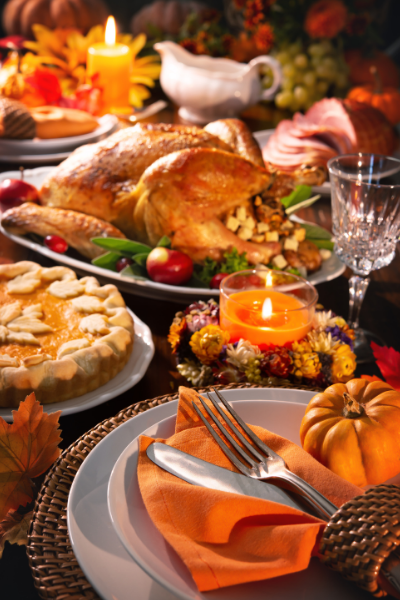
Picture a Thanksgiving table just before everyone sits down. Perhaps it is a table that waits you today or tomorrow or perhaps a table from the recent past or even a table from your childhood. The turkey steams; bowls of potatoes, squash, and vegetables crowd the table; warm bread waits to be broken. People gather—familiar faces, an empty place that stirs memory, perhaps a guest wondering whether there will be room.
Such a table holds abundance and longing, laughter and grief. Every dish carries a story of soil and rain, labour and love, planting, harvesting, cooking, and serving. And today’s Scriptures show us what it means to live at God’s table: to remember who provided the feast, to receive what is offered with gratitude, and to pass it on so that others have a place. Thanksgiving becomes faithful when gratitude pulls out another chair.
Yet a laden table does not automatically make us grateful. We can still fear there will not be enough, guard our portion, and forget the hands that prepared the meal. Thanksgiving asks us to trust the host and see our lives through the grace of enough.
In Deuteronomy, Moses speaks to Israel as the people prepare to enter a rich land of streams and springs, wheat and barley, vines and fig trees, olive oil and honey. After years in the wilderness, they will eat their fill. But Moses warns them: when your homes are built, your herds have multiplied, and your wealth has increased, do not forget the Lord your God.
The danger is not the abundance. The land is good, and its goodness is meant to be enjoyed. The danger is forgetfulness. The people may begin to say, “My power and the might of my own hand have gotten me this wealth.” They may mistake gift for possession and grace for achievement.
We know that temptation. Our work and planning matter, but we do not create the earth from which food grows, command the rain, set the seasons, give ourselves life, or guarantee tomorrow. Our work takes place within a world we have received.
To give thanks is to remember that we are recipients before we are achievers. Our food, relationships, opportunities, talents, health, community, and faith all come to us through a web of grace. Some we have cultivated; none we have created from nothing.
Remembrance changes how we sit at the table. When we recognize that the feast is gift rather than entitlement, our hands begin to open and the bread begins to move.
Paul makes that connection in his appeal to the Corinthians. He is organizing a collection for Christians in Jerusalem who are suffering. He does not want gifts offered reluctantly or under pressure, but as a response to God’s generosity: “God loves a cheerful giver.”
Paul says, “The one who sows sparingly will also reap sparingly, and the one who sows bountifully will also reap bountifully.” This is not a formula for becoming rich. God is not an investment scheme. Paul is describing how grace works. A seed kept safely in a jar remains only a seed. A seed entrusted to the earth can become a harvest.
So it is with our lives. Time becomes love when offered to someone lonely. Talents become blessing when used for a neighbour. Money becomes food, shelter, ministry, and hope when released for others. Gifts bear fruit when shared.
Generosity is not only about what leaves our hands; it is about what God forms in our hearts. Paul writes that God enriches us “for great generosity,” so that thanksgiving may overflow to God. At God’s table, grace is never a private portion. It is bread received with thanks, broken open, and passed along until every hand has been offered some.
Then Luke tells us of ten people with leprosy who stand at a distance and cry, “Jesus, Master, have mercy on us!” Jesus sends them to show themselves to the priests, and as they go, they are made clean.
Their healing means more than restored health. It means returning home, embracing loved ones, worshipping with neighbours, and rejoining the life of the community. All ten receive this gift. Only one turns back.
He praises God, falls at Jesus’ feet, and gives thanks. Luke makes sure we know that he is a Samaritan—an outsider, the least expected to become the example of faith. He recognizes that the blessing is more than a changed circumstance. In his healing, he has encountered the mercy of God, and so he returns to the giver.
Jesus asks, “Were not ten made clean? But the other nine, where are they?” How often do we receive a gift and move on? We wake to another day and hurry into its demands. We are loved, supported, forgiven, and sustained, yet forget to name the grace that meets us.
We may be distracted rather than ungrateful. Perhaps the nine were eager to begin their new lives. But Luke draws our attention to the one who stopped. Gratitude requires a pause. It turns us around and restores our attention to God.
This is why we worship. We gather at God’s table not because life is perfect or every prayer has been answered as we hoped. We gather to remember the host, receive mercy again, and be sent out to make room for others.
That does not mean denying hardship. Around many Thanksgiving tables there is an empty chair, a stretched meal, an uncertain diagnosis, or a difficult winter ahead. Christian gratitude notices who is missing, hungry, or carrying too much—and refuses to leave them alone.
Here the three readings become one invitation to live at God’s table. Moses says: remember who provided the feast. Paul says: pass the gifts along. The Samaritan shows us: return to the host with praise. Remember, share, return—this is the shape of a thankful life.
So when we leave this place, let us practise that movement. Name one gift you have taken for granted. Thank someone whose quiet kindness has helped prepare the table of your life. Share food, time, or money with someone whose place is empty. Pull out a chair for the person who wonders whether they belong.
As we come to the altar, the image becomes more than metaphor. Eucharist means thanksgiving. Christ gathers us, places bread in our open hands, and shows that grace is received, not earned. Here there is mercy for the undeserving, welcome for the outsider, and bread to be broken and shared.
So let the table remain before us. Remember the hands that prepared it. Give thanks to the host. Notice the empty chair, the hungry neighbour, and the guest who is not sure they belong. Then pass the bread and make room. The grateful heart asks not only, “What have I received?” but also, “Who still needs a place at the table?”
For the earth belongs to God, the feast is grace, and our blessings are entrusted to us for the good of others. At God’s table there is enough to receive with thanks, enough to share without fear, and always room for one more. Come to the table. Receive the gift. Pass it on. Thanks be to God.
Amen.