

July 5, 2026, The Sixth Sunday after Pentecost
There is a story told of a traveler who, arriving at dusk in a small village, found the streets empty and the doors half-closed. He followed the sound of water and came upon a well in the square where an old woman sat, drawing up a bucket. The traveler asked for a drink. She handed him the bucket and, as he drank, the traveler noticed that the rope was frayed and the bucket patched in many places. He asked how long the well had served the village. The woman smiled and said, “Longer than any of us remember. It gives what it has, and we mend what we must.” The traveler left with water on his lips and a strange consolation: the well did not promise to be new; it promised to be faithful.
This morning our readings gather around wells and burdens, around the faithful labor of ordinary people and the restless ache of the human heart. In Genesis we meet Abraham’s servant at a well, negotiating a future for Isaac with a woman who will become a mother of nations. In Romans Paul names the tug-of-war inside us—what we want to do and what we actually do. And in Matthew Jesus speaks of children in the marketplace, of those who will not dance or mourn, and then offers the invitation that has become the heartbeat of Christian consolation: “Come to me, all you who are weary and burdened, and I will give you rest.”
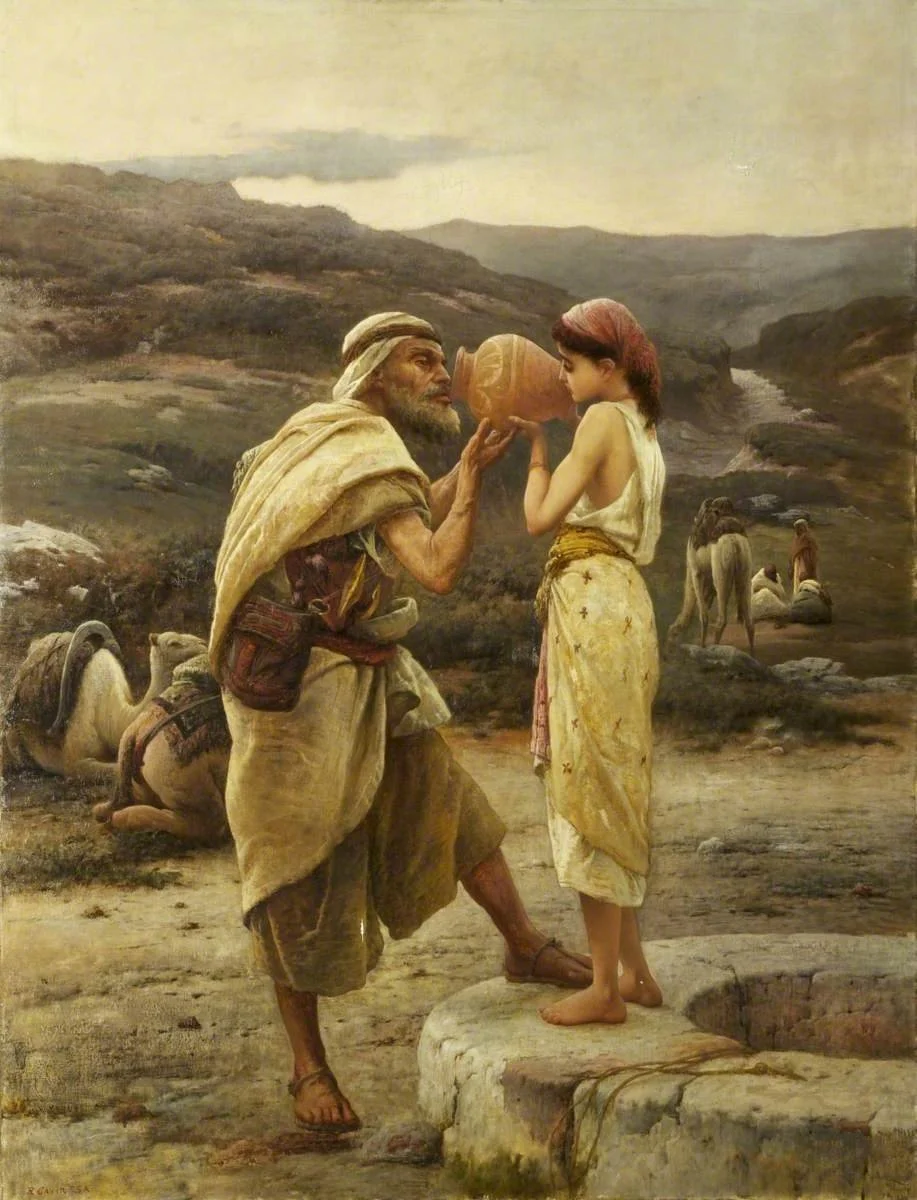
Rebekah at the Well, Robert Gavin (1827–1883), Walker Art Gallery
The Well and the Choice
The Genesis scene is domestic and decisive. A servant, sent on a mission of hope, meets Rebekah at a well. There is a test of hospitality, a recognition, and a covenantal promise. The well is not merely a place to draw water; it is a place where futures are decided. The servant’s question and Rebekah’s response are small acts that carry enormous consequence. The story reminds us that the ordinary gestures of kindness—offering water, offering to water camels—are the soil in which God’s promises take root.
There is a humility to this narrative. No trumpets, no royal procession—just a servant, a well, a woman willing to serve. The future of a people is entrusted to the fidelity of small acts. The well, patched and used, is faithful. It gives what it has. The servant’s prayer and Rebekah’s hospitality are the kind of human responses that open the way for God’s blessing.
The Inner Tug-of-War
And then we pick up another thread as Paul’s words in Romans are brutally honest about human interior life. “I do not understand my own actions. For I do not do what I want, but I do the very thing I hate.” This is not a theological abstraction; it is the confession of a person who knows the gap between intention and action. Paul names the experience we all know: the desire to be faithful and the repeated failure to live up to that desire.
But Paul does not leave us in despair. He names the law that condemns and the grace that frees. He points to a deeper truth: that the struggle itself is not the final word. The presence of the law, the awareness of what is right, is itself a sign that we are not abandoned to our worst impulses. The law convicts, but it also points toward a need for mercy. Paul’s honesty invites us into a community where confession is possible and where grace is the remedy for the gap between who we are and who we long to be.
The Invitation to Rest
As if we were gazing upon paintings at an exhibition, we move on to find that Matthew’s Gospel gives us a picture of Jesus as both prophet and compassionate teacher. He speaks of children in the marketplace—those who refuse to be satisfied by the games others play—and then he offers an invitation that is at once gentle and revolutionary: “Come to me, all you who are weary and burdened, and I will give you rest. Take my yoke upon you and learn from me; for I am gentle and humble in heart, and you will find rest for your souls.”
A yoke is not a symbol of domination here but of shared labor. To take Jesus’ yoke is to enter into a way of life that reshapes our burdens. It is to learn a rhythm of gentleness and humility that transforms the very meaning of work and rest. The promise is not that life’s difficulties vanish; it is that in Christ they are reoriented. The yoke is light because it is shared.
Where the Well Meets the Yoke
What ties these readings together is the movement from ordinary fidelity to inner honesty to divine invitation. The servant at the well models faithful action; Paul models honest confession; Jesus models compassionate invitation. The Christian life is not an escape from the world’s realities but a reorientation of how we live within them.
There is a line from Augustine that has comforted many generations: “You have made us for yourself, O Lord, and our heart is restless until it rests in you.” That rest is not a passive withdrawal but the settling of our scattered energies into a life ordered by love. The well gives water; the yoke gives direction; the confession gives truth. Together they form a pattern: we act faithfully in small things, we name our failures honestly, and we accept the invitation to learn a new way of being.
Practical Bearings for the Church
So what does this mean for us? First, it means valuing the small acts. The church’s ministry is often not in grand gestures but in the steady tending of wells—visiting the sick, offering a meal, listening to a neighbor, gathering together for worship. These are the acts that shape futures.
Second, it means creating spaces for honest confession and mutual support. Paul’s struggle is our struggle. We need to be a community where we can name our failures without shame and receive the grace that reorients us.
Third, it means accepting Jesus’ invitation to share the yoke. The burdens we carry—anxiety, grief, injustice—are real. But they are not meant to be borne alone. To take Christ’s yoke is to enter into a community that learns gentleness together, that resists the culture of performance and replaces it with the practice of mercy.
A Closing Image
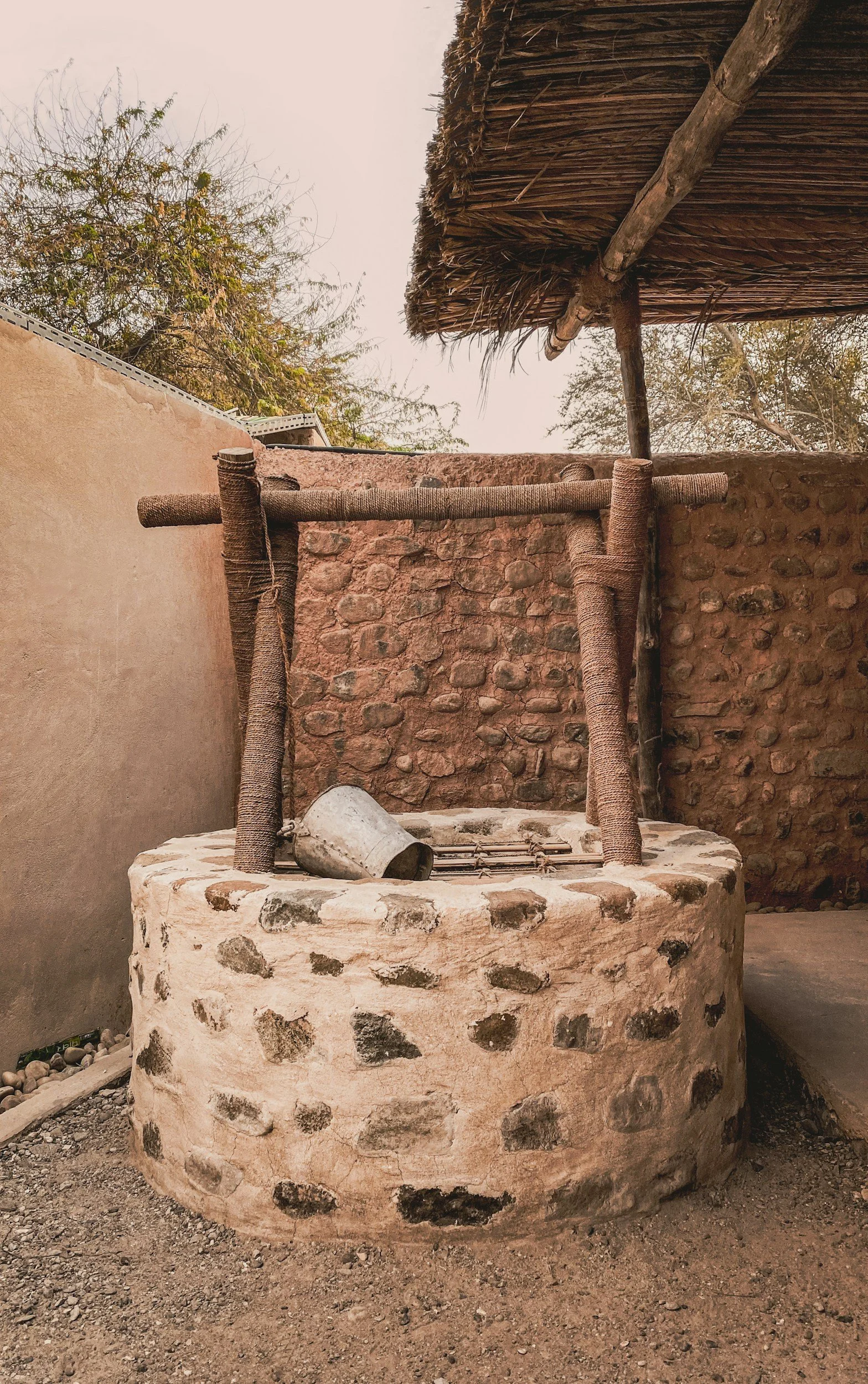
Return for a moment to the well in the village square. Imagine the rope, frayed but strong; the bucket, patched but serviceable. Imagine the woman who draws water day after day, and the traveler who drinks and goes on. The Christian life is like that well: not always new, often mended, but life-giving. We are called to be that well for one another—steady, hospitable, faithful.
So come to the well. Come with your frayed rope and patched bucket. Come with your honest confession and your tired hands. Come and take the yoke that Jesus offers. Learn from him, and find rest for your souls. Amen.